
Multi-scale patterns of plant co-occurrence and functional diversity in patchy vegetation across an arid biodiversity hotspot
2 Sanbona Wildlife Department, Sanbona Wildlife Reserve (South Africa)
3 University of Bayreuth (Germany)
4 Hamburg University (Germany)
O 4.2 in Changing Climate and Arid Landscapes
30.04.2026, 15:00-15:15, FZA conference room
Biotic interactions are key drivers of species composition and the spatial configuration of vegetation communities, particularly at local scales. They are especially important in arid, water-limited ecosystems, which host highly specialised plant species that often co-occur in discrete patches. Despite its status as a global dryland biodiversity hotspot, the role of biotic interactions and species co-occurrence in structuring vegetation of the Succulent Karoo has been addressed by relatively few studies, particularly from a functional trait perspective and across spatial scales. In this study, we investigated how species co-occurrence influences functional diversity at multiple spatial scales, ranging from individual patches to plots and the broader landscape. We analysed the vegetation in three regions of the Succulent Karoo (Knersvlakte, Little Karoo, Namaqualand) and compared patterns between zonal habitats and azonal habitats (quartz islands). Species co-occurrence was more frequent in zonal habitats, whereas patches in azonal habitats were more often composed of single species, a pattern that was consistent across spatial scales. When species co-occurred within patches, they showed a weak trend towards functional trait similarity in most cases. Our results indicate that the strength and expression of biotic interactions vary across spatial scales and habitat types. Considering scale-dependent co-occurrence patterns and functional complementarity may therefore be crucial for understanding community assembly and for guiding restoration and conservation efforts in drylands such as the Succulent Karoo.
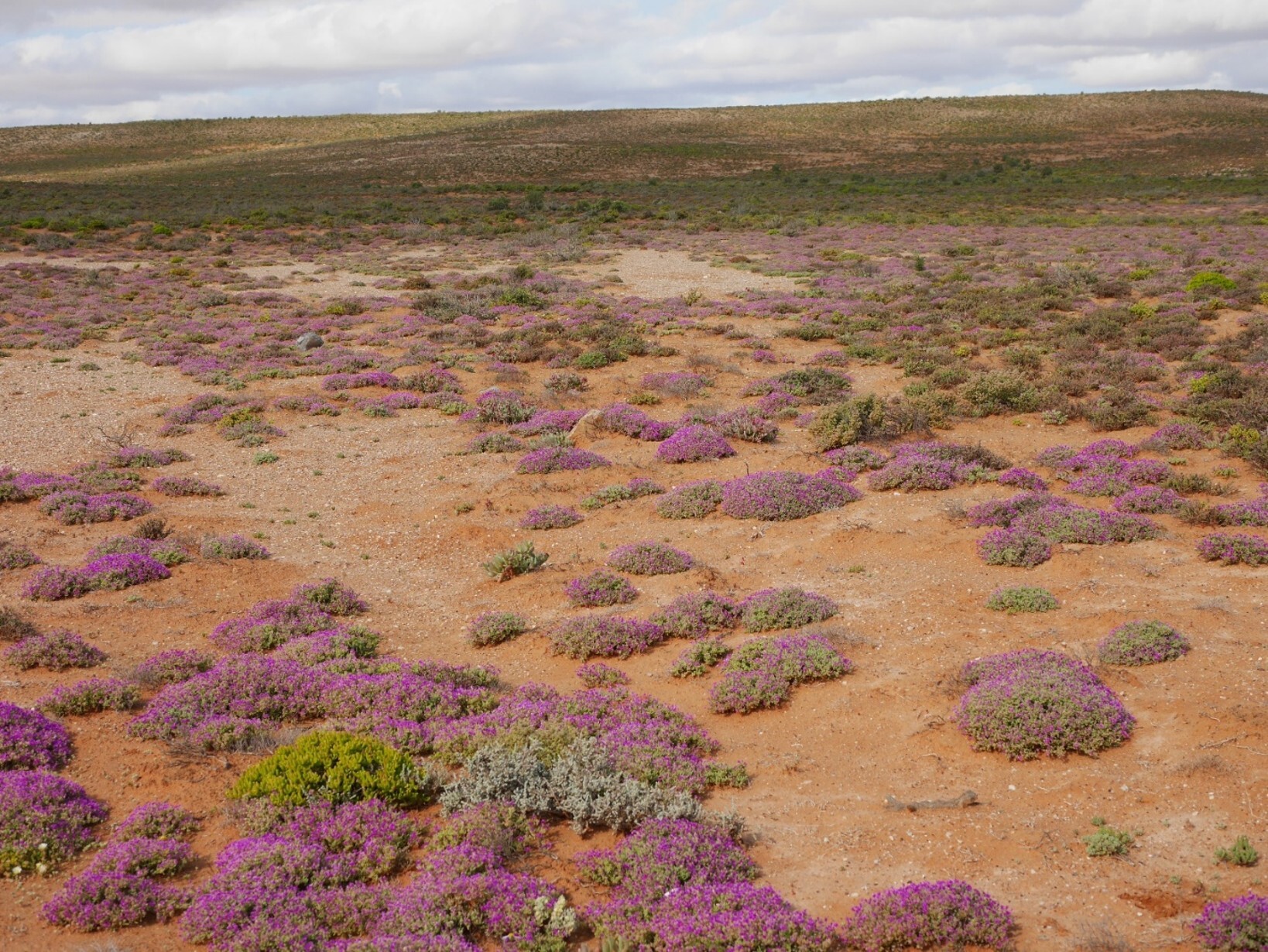
Patchy vegetation in the zonal habitats of the Succulent Karoo
Export as iCal:
