


BayCEER Workshop 2026
08. October 2026
Forest regeneration in an era of climate change and disturbance
1.4 in Morning Session
08.10.2026, 12:00-12:15, H 36
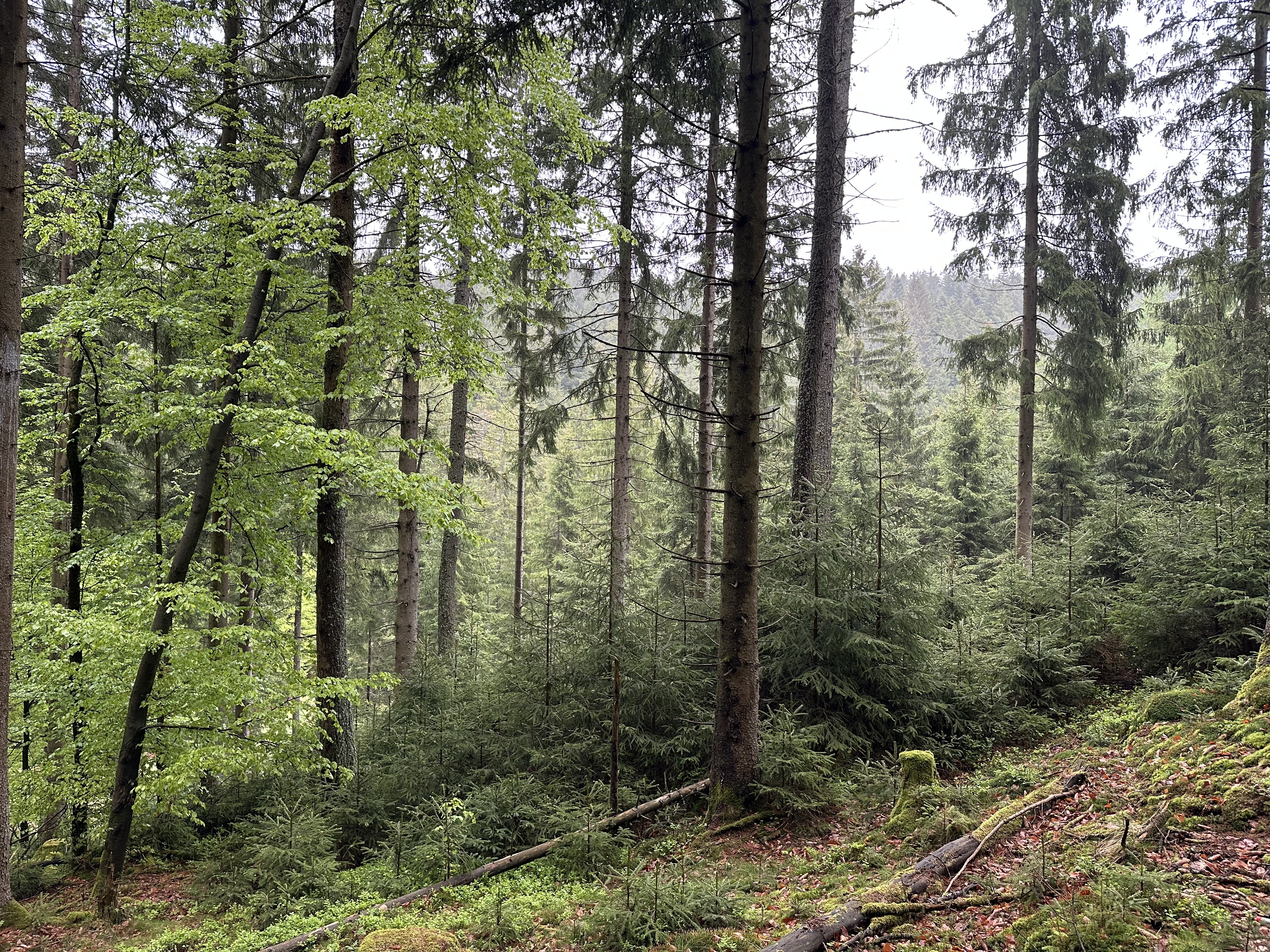
Forest regeneration is essential for sustaining future forest generations and is becoming increasingly relevant in the context of global change, rising disturbance regimes, and a growing need for forest adaptation. Despite its importance, the current state and recent dynamics of forest regeneration remain poorly characterized, with available data remaining underanalysed, limiting our understanding of how forests respond to rapidly shifting environmental conditions. In a German wide study, we examine the spatial distribution of regeneration at both the community and species levels, deriving indicators that characterise climate change adaptation and resilience of forest regeneration. We also analyse temporal trends in regeneration and evaluate the contribution of disturbances to the observed patterns. Using large‑scale data from the German National Forest Inventory, we identify emerging patterns and trends in regeneration composition and structure. Our results provide insights that support the prioritisation of adaptive forest management interventions for developing climate-resilient forests.
When disturbance effects reach beyond the gap
Keywords: forest regeneration, future resilience, climate change adaptation, disturbance
Export as iCal:
