

Background
The ecosystems of the earth are exposed to various and rapid alterations of environment, such as the global changes of climate, element cycles, land use and biodiversity.
Risks to ecological services such as the protection against natural hazards, filtration of drinking water, provision of food and other resources can be expected. Resulting consequences may include economic, social and political uncertainty.
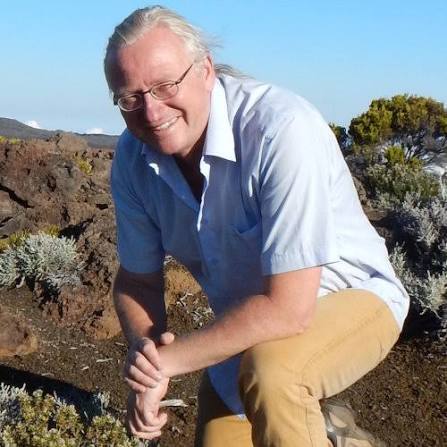
"Solving global ecological problems of the future will only succeed if highly motivated and clever young people devote their energy to this enormous task." Prof. Dr. Carl Beierkuhnlein, em. Founder of Global Change Ecology MSc program |
 |
Scope
The graduate program Global Change Ecology is devoted to understanding and analyzing the most important and consequential environmental concern of the 21st century: Global Change. Using an interdisciplinary approach, the program aims to combine natural science perspectives on global change with approaches of social science disciplines.
The elite study program combines the expertise of Universities of Bayreuth and Augsburg, with that of Bavarian and international research institutions, as well as economic, administrative and international organizations.
Over the past two decades, Global Change Ecology (GCE) has evolved into a highly transdisciplinary field that investigates changes in populations and ecological communities, as well as their impacts on and interactions with ecosystems, the natural environment, and human societies at a global scale. Please refer to Wikipedia to explore more.
